

Cookies 🍪

This site uses cookies that need consent. Find details in our privacy policy

Skip to content

Increase Solar Self-Consumption, Identify Energy-Saving Potential – Brugger Magnetsysteme

Greater energy efficiency, higher PV self-consumption, and intelligent load management with Mondas


On behalf of

Brugger Magnetsysteme develops and manufactures permanent magnet systems for applications ranging from wind power to medical technology. Sustainability is firmly embedded in the company’s strategy. With Mondas, Brugger analyzes its electricity consumption and creates the data foundation for investments and energy optimization measures.

Sustainability as an Economic Factor

Brugger Magnetsysteme, based in Hardt, Germany, has been committed to sustainable business practices for many years. The company, with around 100 employees, is EMAS-validated and has been carbon-neutral for Scope 1 and Scope 2 emissions on a net accounting basis since 2019. Several photovoltaic systems at two production sites, with a combined capacity of 304 kWp, cover 30% of the company’s electricity demand.

The PV systems installed on the roofs of Brugger’s production facilities (shown here: Gewerbestraße site) cover around 30% of the company’s total electricity demand.

Data transparency for better decisions

rugger wanted to centrally record and analyze the electricity consumption of production equipment, facility lighting, and other loads. The goal was to identify energy-saving opportunities and assess their financial viability using actual consumption data. Today, energy data from nearly all energy-intensive machines, the PV systems, and other loads is consolidated on the Mondas data platform.

The key benefit: Continuously collected data makes energy flows and optimization opportunities visible. Additional energy-saving measures can be evaluated economically based on actual consumption profiles.

Optimization Goals

  • Create transparency into the energy consumption of machines and buildings as well as PV generation.

  • Evaluate the financial viability of energy-saving measures and identify previously unknown savings potential.

  • Maximize on-site use of solar power through load shifting.

  • Identify peak loads and create the foundation for battery storage and automation strategies.

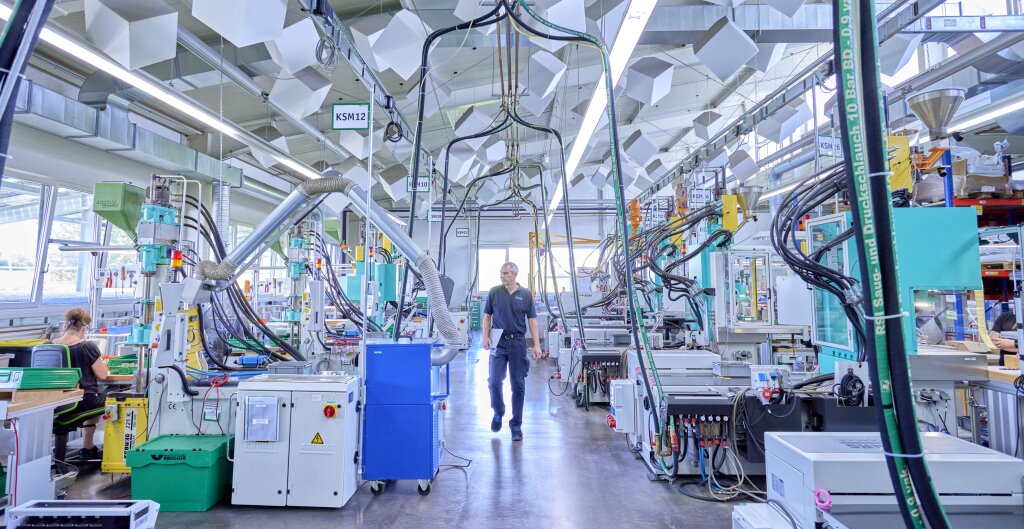
High electricity demand in the injection molding shop: Mondas helps identify opportunities for load shifting.

LED Lighting Example

In 2023, Brugger converted the lighting in its production and warehouse facilities to LED technology. The Mondas data clearly shows the impact: Electricity consumption in the affected area decreased by around 50%, while lighting quality improved at the same time. The lower connected load also reduces peak demand and summer heat gains.


LED retrofit with measurable results: Electricity consumption in the affected area decreased by around 50%.

Testimonials

Creating data transparency is something I recommend to every company. We’ve had very good experiences with it. With the Mondas data platform, we can now identify many additional energy-saving measures, plan them effectively, and assess their financial viability.
Thomas Brugger Managing Director, Brugger Magnetsysteme GmbH

Shift Loads, Make Better Use of Surplus Power

Another goal is to use as much solar power as possible directly on site. Brugger uses the Mondas platform to analyze energy flows and identify opportunities to increase its PV self-consumption rate. In 2025, the self-consumption rate was already 66%. Load shifting and battery storage can increase it further.

Selected production machines could be operated specifically during periods when large amounts of self-generated solar power are available. In particular, the vibratory finishing machine, regranulator, and injection molding machine offer potential for more flexible operating schedules.

EV charging can also be aligned with available PV output in the future.

The load profile of a typical workday shows clear potential for load shifting and battery storage.

The data shows a typical load profile: In the early morning, Brugger still draws electricity from the grid. Around midday, however, the PV system generates more electricity than the facility requires, and the surplus is exported to the grid.

Based on this data, Brugger can economically size a battery storage system and plan additional load management measures.

From Monitoring to Automated Optimization

For Brugger, energy management does not end with the dashboard. Open APIs allow energy data to be connected with other business systems.

As a next step, Brugger plans to derive machine operating times from electricity data and link them with the ERP system. This will make it possible to allocate energy costs to individual machines and products based on their actual consumption.

Peak demand under control: Mondas software issues a yellow or red warning when site demand approaches the defined 160 kW limit.
Brugger Project Profile
Company Brugger GmbH Magnetsysteme, Hardt in the Black Forest, Germany
Application Energy monitoring for production equipment, buildings, PV systems, and other loads
PV systems 304 kWp total capacity
Load shifting potential Vibratory finishing machine, regranulator, and injection molding machine
Load management WarnungWarning when site demand approaches the 160 kW limit
Integration Open APIs; planned integration of energy data with the ERP system

Conclusion

This use case demonstrates how energy monitoring can evolve from simply creating visibility into a tool for concrete business decisions.

Brugger can evaluate energy-saving investments based on actual data, increase PV self-consumption through flexible production planning, keep peak demand under control, and establish the technical foundation for battery storage, ERP integration, and automated optimization.

Book a demo

Book an online demo now.
We look forward to seeing you!
Book now!
Newsletter